


The plant sale is one of our most popular events of the year, and it takes a lot of organization for it to come together! It all starts with the planning process as we are doing our seed ordering in the winter. I will look at the inventory numbers from the previous year’s plant sale. I’ll take note of what sold well and what didn’t, and modify the numbers accordingly. That way, when we buy our seeds for the year we can accommodate the seeds needed for the plant sale in addition to what we need for the field.
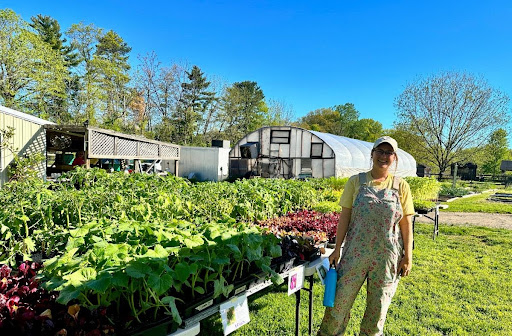
One of the hardest logistical things organizing the plant sale is ensuring all the plants are ready at the exact same time for our plant sale date. We don’t want things ready way too early or not ready at all! It’s definitely one of the most challenging when organizing the plant sale. Usually I’ll take my notes from the previous year like “start the zucchini a week later” or “start the basil earlier, not as big as I’d like” and adjust accordingly. It’s really helpful to have exactly what plant sale things we need to seed each week already listed in our seeding schedule so nothing gets missed!
Tomatoes by are large make up a majority of the plants we start for the plant sale. We pot up about 550 tomato plants! Usually we are planting many of the same varieties as what we are growing in the field, so when we begin our first round of tomatoes, we overseed our trays a lot depending on how many we need. If we are starting a variety that we are not growing in the field for CSA, we will seed those specifically in very small channel trays where we can fit a lot of seeds without a lot of potting mix.
Once the tomatoes are little seedlings, we will prick out the extras, and plant them into 4” pots. One of the more laborious, and very necessary, parts of the potting up is labeling each pot with the variety of tomato. We don’t want any mystery plants. Prior to this year, we had been handwriting each tape label and sticking them on the pots, which took a long time. This year, in effort to make the labeling process easier, I headed over to a company that produced printed tags, and that made it incredibly faster. We did write what we called “secret codes” on the pots with our sharpie markers for each variety in the event a tag fell out. Again, no mystery tomatoes allowed! For instance, one of our secret codes was “BB” for Big Beef, or “Wine” for Pink Brandywine. The sharpies is too hard for customers to see at the sale, but we would be able to see the label in case the tags fell out.
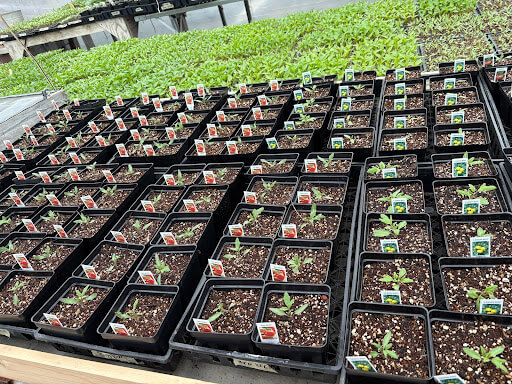
Potting up all the tomatoes takes a LOT of potting mix as we are filling much bigger pots that we usually use. This year, I wanted to research whether or not using pre-made potting mix would be useful in reducing labor input for the plant sale. I did some random test trials of tomatoes, squash, lettuce, and kale where I planted half the tray with our mix, and half with the predmade mix from the same company we get our humus and other fertility measures from. What we noticed was that the premade mix, which actually advertises your plants will be ready a week earlier, was much faster than ours. The plants grew quickly and greened up fast. Ours sat a little slower for longer, but by the time the premade mix was running low on nutrients, ours was really thriving and ended up producing larger more lush plants. It was a really interesting experiment, and part of the appeal of our mix is that if for some reason our plants are ready a little ahead of the plant sale, they will have plenty of nutrients to tide them over for a while. So as much as saving labor would be nice, I don’t think I want to sacrifice all the lush benefits of our potting mix!
For most of our other plants, cucumbers, squash, basil, and flowers, we start them specifically in the trays they will be sold in. We use perforated trays that can tear apart once they are at the sale. Having them all together versus individual pots makes it much easier for us in the greenhouse while working with them. One of our trays is the 32-cell size for individual plants and the other is the 1206 trays that have 12 6-packs for flowers.
For some of our plants, we sell the extras from our regular transplants. We only have so much space in our greenhouse, and its usually chock full! We always seed extra plants for the field in the event something happens after we transplant, so we take the extra seedlings and repack them into smaller trays easier for individual sale. Thanks to our amazing volunteers who cut apart old and broken trays into 4-packs to repack the plants into! We’re very happy to see many of these extras go to a great home!
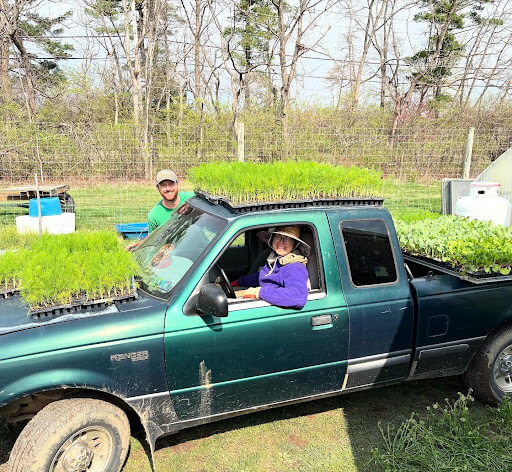
Once we get close to the plant sale, we’ve had volunteers putting in any tags needed and making sure all the plants are ready to go for the big day. We’ll have a few hands helping construct some tables near the front of the farm and moving the plants to them for Saturday.
We also make sure all our labels for the big day reflect the varieties we’ll have for sale by updating their descriptions, printing them out, and laminating them. The plant sale takes a lot of effort to pull off, but is such a pleasure being able to grow great seedlings for our community gardeners!