


A significant challenge in the winter time is controlling downy mildew on multiple winter staple crops like lettuce and spinach. Here’s what we do at Pennypack:
Spinach:
An important part about controlling downy mildew in spinach is variety selection. From conversations with seed reps, it seems like research farms are always trying to stay ahead of the downy mildew as they breed spinach varieties. We’ve had to discuss spinach varieties almost every year because every time we find one we like, it seems it is discontinued by the next year.
We grow 4-5 beds of winter spinach under low plastic tunnels (see previous blog posts for more information on low tunnels). Even with careful and dedicated cultural controls like venting, opening doors, and uncovering row cover to promote air flow, spinach can still be very susceptible to downy mildew under low tunnels and high tunnels.
A few years ago we grew varieties like Space and Flamingo. We found one year they were successful and the next they were not. The same happened when we chose to grow some Kookaburra under low tunnels. We have had amazing results growing Kookaburra for our fall field succession; it is unbelievably cold hardy and we continue to harvest from these uncovered beds throughout the winter as long as there is not significant snowfall. Because of this, we thought it would do well under the low tunnels and decided to grow half of our low tunnels with Kookaburra. It was a disaster. It got downy mildew so badly that we never even picked from it. Thankfully the other two low tunnel beds were planted with Auroch which was very productive and resilient, and we continued to pick from the outdoor field plantings too. You can see the difference between the Kookaburra downy mildew and the Auroch beds in these photos.
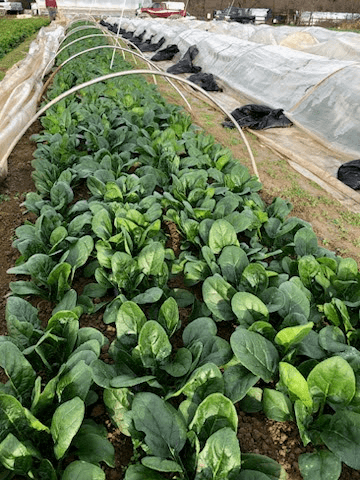
Left Picture is “Auroch”
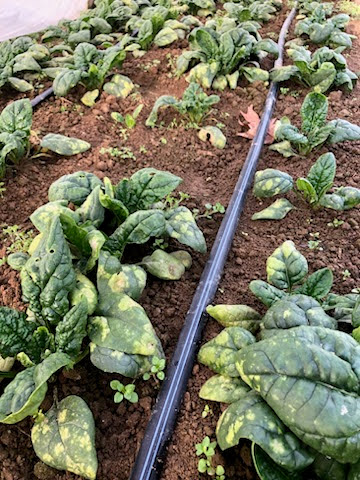
Right picture is “Downy Mildew on Kookaburra”
Below is the uncovered Kookaburra from the fall that didn’t get any downy mildew compared to the low tunnel Kookaburra:
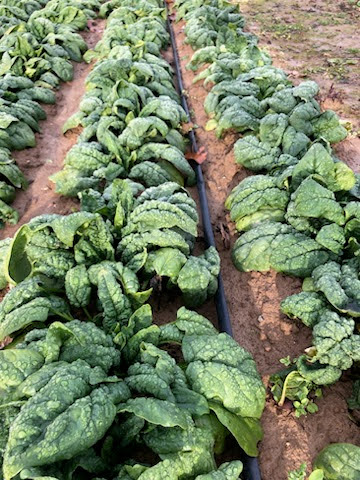
Good Fall Uncovered Kookaburra
That was a very valuable lesson in how variety makes all the difference with spinach. This year we took our 2023-2024 winter trial with Auroch and decided to plant all four beds with it. We also tried one extra bed of Kolibri, but only covered it with a row cover and not plastic.
After last winter, we did sanitize our spinach plastic with Oxidate 2.0, and labeled them so we could rotate them and use them for the kale low tunnels this year. We haven’t been in the practice of sanitizing them each year, but we may consider doing that again as a good cultural practice.
Downy Mildew on Cut Loose Leaf Lettuce in the High Tunnel:
Every year we also are careful about downy mildew on our Tango lettuce in our hoophouse. We have been growing Tango for many years now, and it is very cold hardy. Some years we have dealt with bad downy mildew issues, and now we have a plan to help combat it. First of all, our hoophouse is Movable, so we rotate where the winter lettuce goes. Second, before transplant we do a root drench of Actinovate and/or RootShield. We also added liquid kelp as a boost after transplanting.
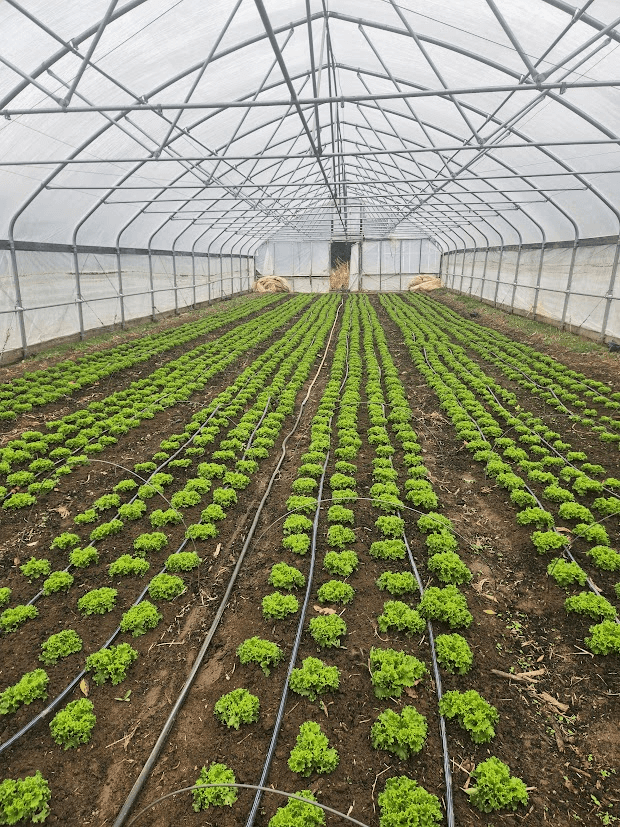
Tango lettuce with drip tape irrigation
After planting, there are cultural controls first and foremost. During the winter our well is turned off, and we use town water to water from our frost free yard hydrants. For many years, we ran hoses to our hoophouses and used overhead sprinklers. This year we switched to laying drip tape to bottom water. We did periodically use the sprinklers in the late fall to prevent powdery mildew from establishing. Whether we water with drip or sprinklers, we follow some basic watering protocol in the winter. Plants just don’t need as much water with their slowed down growth, so we really make sure to let the soil dry between waterings. It’s a fine line however, because you need to water your plants before cold snaps as they do much better dealing with lower temperatures when well watered. We also try to water on sunny days, and in the time when we solely used sprinklers, we’d only water in the morning and not late afternoon. However, the drip takes much longer and since it’s not getting the leaves wet, it usually stays on the whole day. I would love to figure out a way to fertigate the lettuce with RootShield or Actinovate through the drip, but that’s for next year’s setup! In the meantime, we do spray Oxidate 2.0 every two weeks or so throughout the winter. As an organically growing farm, we adhere to all organic standards and regulations for products and only use OMRI-approved sprays. In the summer, we never really use Oxidate because it kills the beneficial bacteria/fungi just as much as the bad. We usually use biological products like Stargus and Regalia, which help promote beneficial bacteria and activate immune responses in plants. However, it is very important to read product labels, as many of those biologicals do not work below certain temperatures. Stargus and Regalia don’t do well in winter temperatures. Oxidate is one of only a few options in cold weather. And that’s a bit about how we control for downy mildew in our winter crops that are particularly sensitive to it. Winter growing can be tough, and if anybody reading this has insight or great information to share about dealing with downy mildew in the winter, please feel free to reach out via email! steph@pennypackfarm.org

Heads of lettuce