


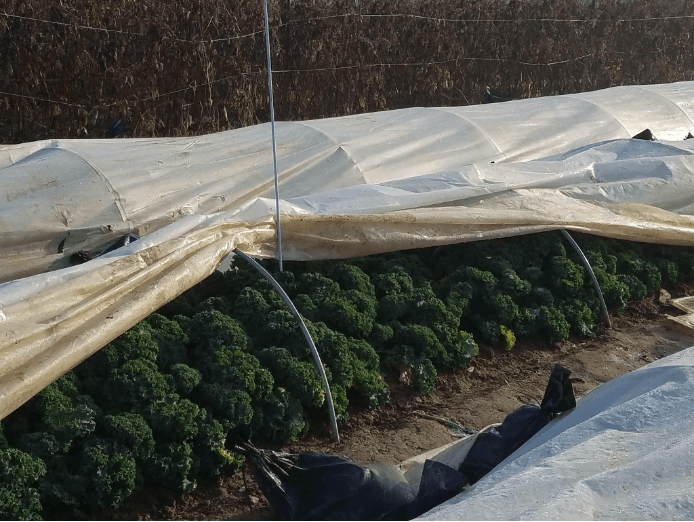
Although our days are a lot slower than the summer, we still have plenty to do with daily and weekly crop maintenance both in the fields and the high tunnels. We have 8 rows of low tunnels outside that use heavy duty hoops for snow and 6 mm plastic where we grow Starbor kale and Auroch spinach. We grow Sierra and Red Salad Bowl lettuce heads outside for as long as possible under two layers of Typar row cover. Inside our unheated high tunnels we grow Arugula, Yokatta-Na, Tatsoi, Choko Bok Choi, and Tango lettuce for loose leaf cutting.
I’ll walk you through our daily routine maintaining these crops:
Outdoor Crops:
Every day around 9 AM we vent our low tunnels if we have sunny conditions at any temperature above 20℉, cloudy and over 30℉. If it is super windy we won’t vent. The goal of venting is to promote air circulation that can help keep down disease and prevent large swings in temperature between night and day that can stress out the plants. The low tunnels do not insulate very well but do warm up enough to promote regrowth and protect from snowfall. The biggest disease that can affect the kale under low tunnels is sclerotinia white mold. The biggest disease for spinach in the winter is definitely downy mildew.
We vent at four places along each row. To vent, we simply open a few sandbags at that spot, pull the plastic up, and place a fiberglass stick in the ground to hold the plastic up
We will close the tunnels at 3 PM every night as long as temperatures are below 35℉. If it is mild, we will leave them open.
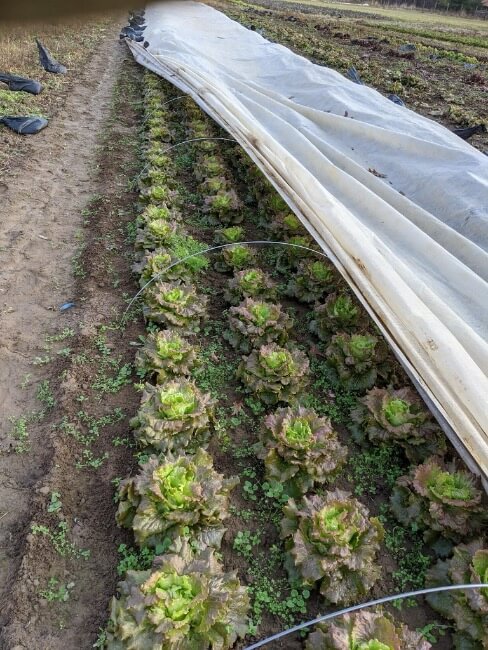
Our lettuce heads under row cover need no daily managing, but do need to be monitored for the small hoops collapsing after rain storms. We will go through and straighten them up to lift the row cover off the plants, as they can sustain frost damage where row cover freezes to the lettuce.
The indoor maintenance of crops has a few more steps. We will always open doors every day and close them at night. If nights go below 28℉, we’ll cover with row cover and double row cover below 10℉. We uncover any row cover in the morning for the day to allow the ground to warm and the most light to come in, and will recover at night.
The arugula is the easiest to maintain as it doesn’t have too many disease pressures and the voles usually stay away from it. It is not as cold hardy so we plan our first harvest around December and let it regrow for a second cutting in late January/early February.
Our tatsoi and bok choi are also easiest to maintain for the cold, as they are some of the hardiest plants we grow, but difficult with pests. The voles and slugs really love them! We do set mousetraps early and often to prevent damage. Also walk around the outside of your high tunnel as you can usually see where the voles’ trails are and where they are coming from. Try to keep row cover off the ground whenever you are not using it to cover so they don’t nest underneath. Slugs are also bad for these crops so we are careful to let them dry completely between waterings and we will apply Sluggo around the crops after watering.
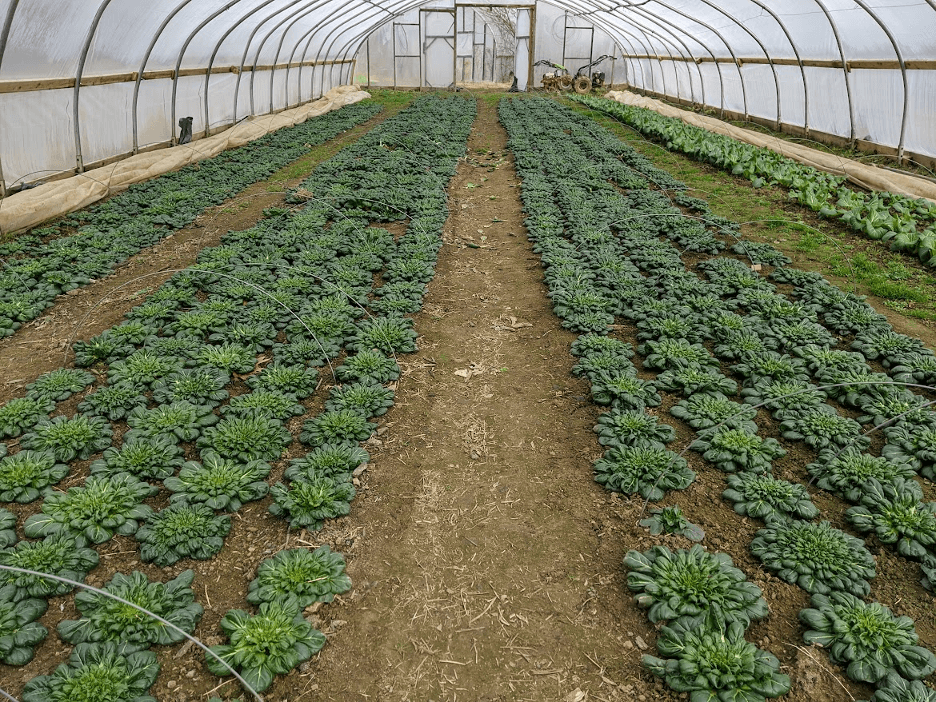
The tango lettuce does sometimes have vole damage on the outsides, but by far the hardest to manage for disease. Downy mildew and other fungal diseases can thrive on indoor lettuce. Here’s what we do for that:
- Do a root drench before transplanting with RootShield or Actinovate, and liquid kelp.
- Let it really dry between waterings.
- Use drip irrigation to prevent downy mildew, but also overhead periodically to ensure powdery mildew doesn’t take hold, especially in the fall.
- While the sprays we normally use in the summer are mostly OMRI biologicals, they often can’t be used in cold temperatures. Always look at the label for temperature ranges. So we turn to Oxidate 2.0 to spray periodically on the tango to prevent disease, which we never use on crops in the summer.

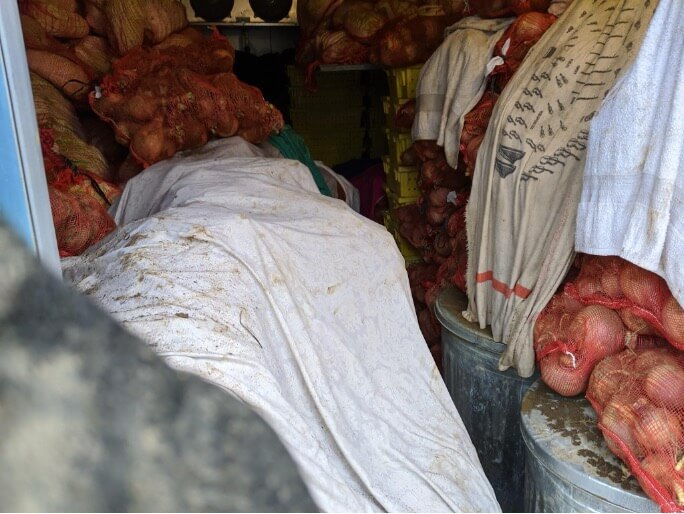
The last crops we have to take care of are the ones already harvested! It is important to maintain your storage crops too. In our walk-ins, we have tons of root vegetables in produce mesh bags like rutabagas, gilfeather turnips, carrots, beets, radishes, and celeriac. We will place wet towels over all the root vegetables, and replace them weekly. We do not place wet towels over our Napa, red cabbage, or potatoes.
We have an insulated trailer for cold storage of potatoes, and that needs daily check to ensure the coolbot is running and to plug/unplug the space heater that stays on overnight. We turn it on low most times and up a little more for really cold nights in the 20s. We also have a space heater in our sweet potato cold room that also gets plugged in/unplugged every day.
Winter crops need daily maintenance and can be a significant time commitment. But we have found that if we put in the time and effort, our winter crops are much better off and can sustain our 180-share Winter CSA!